-

Southdown Sheep Society, NZ

"The sheep with an illustrious past and a very bright future"

Archive for the ‘Shows & Ram Fairs’ Category

Showing maintains competitive edge

Posted by The Roving Shepherd On May - 12 - 2026

Southbridge sheep breeder Andrew Christey can vividly remember taking over the family’s Mapua Southdown stud on a day of mixed feelings.

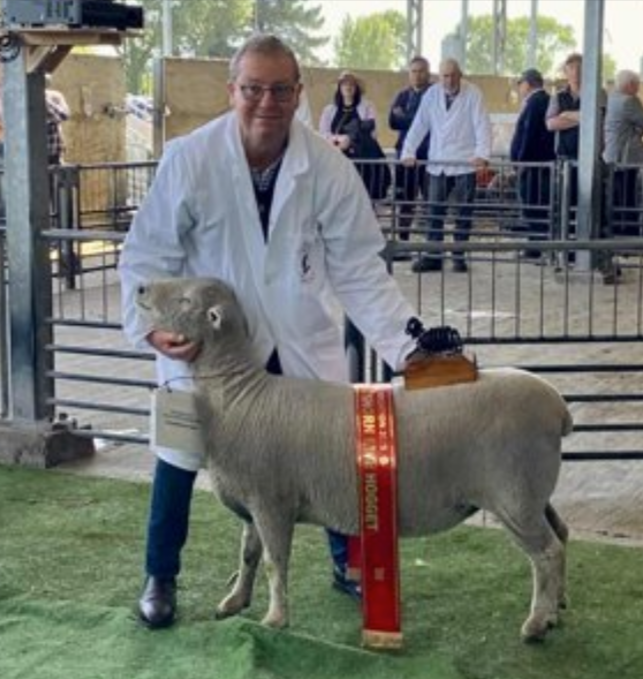
Southbridge breeder Andrew Christey with the winner in the Southdown Ewe Hogget and All Breeds Miss Canterbury classes at last year’s Canterbury A&P Show.

Southbridge breeder Andrew Christey with the winner in the Southdown Ewe Hogget and All Breeds Miss Canterbury classes at last year’s Canterbury A&P Show.

In between the excitement of he and wife, Louise, carrying on a family tradition was the financial reality.

His father, the late Leo Christey, started the stud with brother, Edward, in 1959 as part of a farm partnership.

With a flock number of 3656, Mapua is the 10th-oldest stud listed in the flock book.

During the 1970s it was transferred into the name of his parents, including mother Leonie who took a keen interest in sheep breeding. In 2007 they took on half the stud.

“The other half was sold to Blair Robertson, who is a well-known stud breeder. Little did I know just how much that half was going to cost me, to be fair. I just said: I will pay what he’s paying and then the bill came in.”

With two children under 5 years, Mark and Sarah, they were keen to carry on the family progression.

Like his parents, they attended the Ellesmere, Christchurch, Oxford, Amberley and Banks Peninsula A&P shows and other events around the country.

The thrill of winning a ribbon in the competitive show ring and the camaraderie among stud breeders was never lost on them.

So there were no regrets about taking on the stud, but its cost was not without financial pain.

“I had just bought the parents out of the farm so I had a few debts on and I think it was something like $40,000 or $50,000 for the stud so it was a little bit more than anticipated. But it was something we could all do as a family and the shows were always a busman’s holiday for us and both kids have grown up liking, enjoying and being a big part of the stud.”

Helping ease the pain somewhat was the sale of Mapua 229/06 for $6400 a year later to Andrew and Tracey Powdrell, who had bought their rams and ram lambs for 30-plus years.

Greendale’s John Clarkson has been a regular buyer for 40 years.

Among other highlights, including winning many show trophies and ribbons, was selling 169/21 to Clifton Downs breeder Chris Medlicott for $6000 in 2022.

On the flipside, the Christeys bought a $13,000 ram in partnership from the Willowhaugh stud about 10 years ago and more lately Clifton Downs bloodlines.

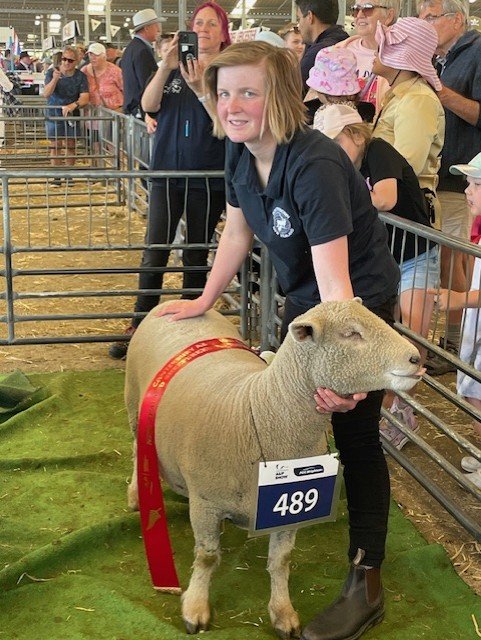
Sarah Christey competing in the youth classes at last year’s Canterbury A&P Show

Sarah Christey competing in the youth classes at last year’s Canterbury A&P Show. 

Each year they sell about 30 two-tooth rams and the same number of ram lambs privately, often through stock agents.

The stud flock of 140 breeding ewes mother about 200 lambs at a 160% to 170% lambing percentage.

Some 40 to 50 of the top ewe lambs are retained, as Mr Christey prefers to replace older animals failing to meet high performance standards with younger ewes.

Southdowns are crossed with their commercial flock of about 230 Romney crossbred ewes as their early maturing lambs appearing in late July/early August go off the farm in late November and start of December.

This frees up a busy farming system so they can shut up paddocks, usually for Wattie’s — although the local factory has just closed — and small seed crops.

The commercial flock once numbered 800 crossbreds, but a smaller base is needed to fit in dairy grazing, weaner pigs produced from outdoor sows and a cropping mix of small seeds, wheat and barley.

On an intensively run 110 hectares, wheat and barley are fed to the pigs with straw from these crops and grass seeds going to dairy cows in the winter. Oats and grass are fed out to the sheep in winter and they are then lambed in grass seed paddocks.

Mr Christey said he had always been fond of Southdowns because they were “meaty” animals with a high-yielding frame producing tasty meat.

He prides himself on breeding sheep with good feet and a sturdy body structure that will not let down their buyers.

Many of their rams and ram lambs are sold to hill country farmers in Hawke’s Bay and Gisborne.

The Christeys’ operation is among seven studs opening their gates on a stud tour by breeders as part of the Southdown Sheep Society’s four-day centenary celebrations this week.

The Christeys’ connection with the breed was likely to continue: Mr Christey said the family was competitive, enjoyed selling and showing stud animals and sheep breeding was the one thing they all agreed on.

Mark, 25, has spent a lot of time overseas the past five years including planting and harvesting seed in Western Australia.

Sarah, 23, enjoys stud recording and works with her father taking three weeks off work to carry this out, and tagging, for Mapua at lambing.

Their son is keen to carry on the farm and they are working out the best way to do this as they do not want either of them to go through the same big bill pressure they did. The plan is for Sarah to have her own stud on the farm.

By Tim Cronshaw ODT Rural Life

Passion breeds ‘extremely efficient’ Southdown flock

Posted by The Roving Shepherd On May - 12 - 2026

Dessert with a side of Southdown, anyone?

An elite ewe auction is one of the highlights of this week’s Southdown sheep tour in Canterbury, celebrating 100 years of the Southdown Sheep Society of New Zealand.

The auction will be held on Wednesday evening in conjunction with a tour dinner at the Benvenue Hotel in Timaru and also utilising the Bidr online auction platform.

To be held between the main course and dessert, the auction will comprise ewes given by the Wiri, Merrydowns, Omihi, Riverside and Clifton Downs studs and all proceeds will go to the society’s promotional fund.

The tour begins today with a council meeting and annual meeting in Christchurch. Tomorrow, there will be visits to the Flockton stud of John and Melissa Jebson and the Longlee stud of Sam and Anne Hughes.

These will be followed by a visit to Riccarton House, the original home of the Kirkstyle Southdown flock — the first registered Southdown stud in New Zealand, founded by John Deans in 1863.

After lunch at the Makikihi Country Hotel in South Canterbury on Wednesday — voted best South Island rural hotel last year — the tour will head to Chris and Shelley Medlicott’s Clifton Downs stud, followed by John and Macaulay’s Tahrua stud.

It wraps up on Thursday with a visit to three studs — Stuart Brannigan (Musburg), Christey family (Mapua) and Brent Macaulay (Maclaka) — plus a large-scale dairy farm milking about 4800 cows.

The Southdown originated in the United Kingdom and is the oldest of the terminal sire breeds, originating from the native sheep which roamed the South Downs in the south of England for hundreds of years.

The Southdown Sheep Society was formed in 1926 after becoming strong enough in its own right to move away from the Sheepbreeders Association where it had been a founding breed.

The number of Southdown studs peaked in the late 1950s and early 1960s — up to about 1800 — and today there are 46 registered flocks.

In those 100 years, the society has only had three secretaries, including long serving incumbent Christine Ramsay. Chris Medlicott, who farms at Hook, near Waimate, is president, while Don Murray of Waitahuna, is chairman of the centennial organising committee.

Chris and Lave

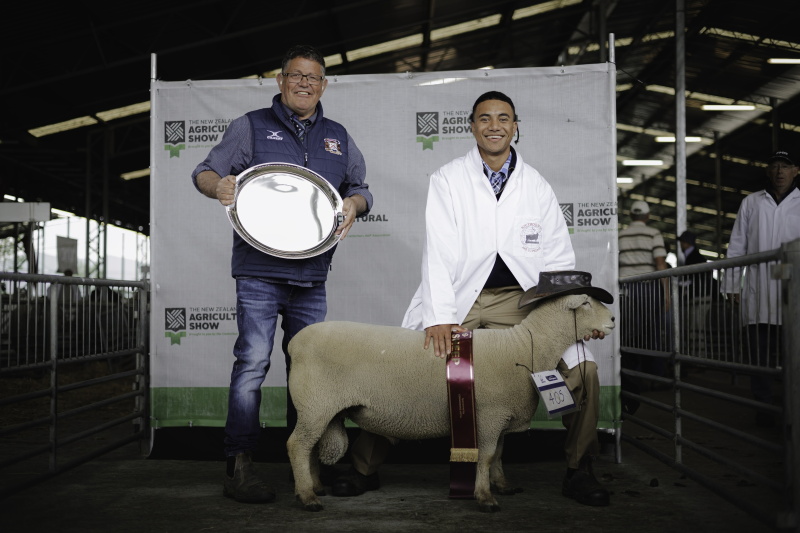
Tongan farm worker Lave Masila, with his boss, South Canterbury Southdown stud breeder Chris Medlicott, at the NZ Agricultural Show in Christchurch in November. was founded in 1956 by Chris’ late father Bill, when he left school, and grandfather Jack.

Both shared a passion for the prime lamb industry and they started a stud because they could not buy rams with the conformation they wanted.

Their stockmanship has been handed on to successive generations, both Chris and his son Miles, who is a livestock representative for Anzco Foods.

And they have also shared their knowledge; young farm worker Lave Masila knew nothing about sheep when he landed in New Zealand from Tonga.

Now a key figure in the Medlicott’s farming operation, he had become part of their family and Chris has helped him to establish his own Southdown stud.

Mr Medlicott said the best part of the breed was the people: those involved in the breed were committed, passionate breeders who were trying to keep it relevant to the times.

It was a purebred breed which had stood the test of time and been able to adapt to market-led changes. “I just think they are extremely efficient and have never let me down,” he said.

The family has an on-farm ram sale and sell about 70 rams per year, from East Otago to North Canterbury and also into the North Island. It had been a great year and it was good to see the confidence in the sheep industry, he said.

Written by Sally Rae – ODT Rural Life

Sale of prized ram puts more than 4000 meals on tables

Posted by The Roving Shepherd On February - 13 - 2024
The sale of Waimate breeder Chris Medlicott’s ram has provided more than 4000 meals for people experiencing food insecurity across Aotearoa.

The sale of Waimate breeder Chris Medlicott’s ram has provided more than 4000 meals for people experiencing food insecurity across Aotearoa.

More than 4000 meals have been provided for less fortunate families from the generosity of one man and the sale of his prized ram.

Chris Medlicott, a breeder for Clifton Downs Southdown Stud, donated the proceeds from the ram he sold in his November on-farm sale to two charities that help to feed less fortunate families.

Every year, Medlicott hosts a ram sale of up to 80 sheep. After seeing South Canterbury breeding organisation Shrimpton’s Hill Herefords donate a bull to Meat the Need and Feed Out, Medlicott said making his own donation after the sale was a no-brainer.

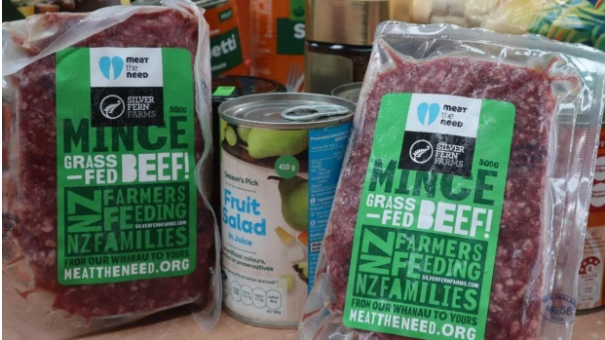
The charities helped to turn donations of cash, livestock and milk into meals for families with help from Silver Fern Farms, Miraka and Fonterra.

The proceeds from Medlicott’s ram sale created 4295 mince and milk meals for 110 food banks and community organisations nationwide through the help of a number of charities.

Waimate breeder Chris Medlicott hosts a ram and sheep sale at his farm every year.

Waimate breeder Chris Medlicott hosts a ram and sheep sale at his farm every year.

Medlicott said being able to donate homegrown protein to families facing food insecurity was priceless.

“It’s always a good feeling that you’re helping someone in need, and in all walks of life, really,” he said.

“I’m really proud that we produce top quality New Zealand food, but there are some people in this country who can’t afford to eat it.

“We want all New Zealanders eating produce off our farms and that was really the reason for me to donate.”

Meat the Need is a national charity helping to connect farmers with charities to help put food on the table for struggling Kiwis.

Meat the Need is a national charity helping to connect farmers with charities to help put food on the table for struggling Kiwis.

He said times were tough on farms, with inflation the highest it had been in 40 years at 16.3%, but donating was something Medlicott was passionate about and would continue to do.

“Donating is always a good thing to do, to be honest I think New Zealand society has lost the giving aspect a wee bit, so it’s nice to be able to make a bit of an impact on whoever needs it.”

ADVERTISEMENT
The PGG Wrightson auctioneer also chose to donate their commission to the causes.

New Zealand Agricultural Show: Southdown ewe the mother of all champions

Posted by The Roving Shepherd On November - 25 - 2023
A Southdown ewe bred by Christina Jordan at Willowhaugh Enterprises will take some beating after giving birth to quadruplets following a symmetrical sequence of lamb deliveries.

A Southdown ewe bred by Christina Jordan at Willowhaugh Enterprises will take some beating after giving birth to quadruplets following a symmetrical sequence of lamb deliveries.

A champion ewe is the mother of all mothers in the show ring.

The 2018-born ewe, 479-18, has produced near-perfect symmetry in her lambing sequence for the past four seasons, rounded out with a quartet of newborns in her latest effort, leading her to claim the Supreme Animal of the Show title at the New Zealand Agricultural Show.

As a ewe hogget, the Southdown ewe from the Jordan family’s Willowhaugh Enterprises delivered a single lamb, no mean feat for a first-time mother.

In year two she gave birth to twins and then triplets in her third lambing.

This season four lambs emerged, and the only minor gripe breeder Christina Jordan could come up with was the ewe-to-ram lamb ratio could have been reversed.

“She’s got three ewe lambs and one ram lamb though, so maybe she hasn’t quite got the symmetry right.

“Maybe she wants to increase the flock size quickly, I don’t know.

“I think she could go back the other way now, probably to triplets or twins.

“I would be quite happy as a lot can go wrong from the time they scan them and find they are having four.”

Virtually self-selected by this record, Jordan placed her in the New Zealand Agricultural Show and was rewarded with a red ribbon in the Southdown ewe over 30 months with lambs at foot class, before going on to win the supreme title.

“This is the first time she’s been in any show actually and amazing, she’s done it all herself.

“She’s reared all her lambs so now she’s had 13 of them and she’s 5 years old.

“She’s just one of the team who does the hard work and comes up with the goods.”

By the end of the first day, the show ring debutante added Supreme Champion Southdown, All Breeds Super Ewe, Supreme Meat Sheep of the Show and the big one – Supreme Animal of the Show to cap it all off.

Her quadruplets weighed in last week at an impressive total of 134 kilograms.

Jordan runs the stud with her nearly 97-year-old father, Ian, at Woodbourne near Blenheim airport.

She said the ewe had earned her money, as her daughter of a few years ago also won the 18-month to 30-month class at the show with twins, after lambing the previous year as a hogget.

Top mothering skills aside, she passes on her genetics freely as a ram lamb of hers was used for breeding within the stud.

Her high SIL figures for maternal, udder, meat and terminal values also stack up.

“The quads were born at the back paddock and I keep them near Dad’s house so he can keep an eye on the triplets. We only had nine triplets and one quad.

“He’s just in raptures over it and only has rose-tinted glasses for her.

“I think it’s quite emotional seeing a ewe with her four lambs and she’s had them all, she’s reared them all and we haven’t had to do anything.

“So to get them to the show all alive and relatively even is a real credit to her.”

Over time, he’s observed the ewe managing the feeding of her progeny two at a time before rotating the other pair half an hour later.

Her ewe lambs will end up as flock replacements and the ram lamb may eventually be sold to free up bloodlines.

As well as the 180 pedigree Southdown ewes and 40 hoggets, the family enterprise also runs a commercial flock, jersey dairy cattle, a Charolais stud and a vineyard at home base.

The Jordans’ Southdowns are sold at the Canterbury Elite Ram Fair and for the past three years, they have run an online ram sale in November.

Jordan said she’d had a quad-birthing ewe once before and had no desire to raise this to quintuplets next year.

A&P show a way to remember ancestors – Neville Moorhead

Posted by The Roving Shepherd On October - 28 - 2023
Southdown sheep breeder Neville Moorhead, 82, has gone through the ranks from being a sheep exhibitor, steward, convener, president, life member and patron at the Ellesmere A&P Show.

Southdown sheep breeder Neville Moorhead, 82, has gone through the ranks from being a sheep exhibitor, steward, convener, president, life member and patron at the Ellesmere A&P Show. PHOTO: TIM CRONSHAW

A Southbridge farmer whose great, great uncle competed at the Ellesmere A&P Association’s first show in 1871 is keeping the family legacy alive, writes Tim Cronshaw.

Neville Moorhead stretches easily over a fence before running a practiced eye over a small mob of Southdown rams to make his final cut.

The powerfully-framed stud sires cluster together before jostling to a corner of the front paddock at Holly Farm in Canterbury’s Southbridge.

It’s the day before the Ellesmere A&P Show and the 82-year-old, who turns over another year in December, shows no sign of nerves.

That’s to be expected from a veteran sheep exhibitor, who was in a pram for his first show and hasn’t missed one since.

The show’s honorary life member and patron can trace his family’s connection to the first event in 1871.

Staged in a borrowed paddock, a Moorhead was among the exhibitors.

“The first show ever held was in Southbridge township and one of the relatives, a great, great uncle, something like that, exhibited a pair of Clydesdales and was successful in winning with them. That’s where it came from and I suppose where I got a bit determined. You try to keep things going for as long as you can. It hasn’t been unbroken all the same.”

The 150-year link is a remarkable effort by one family.

His grandfather, Hugh Galpin, exhibited sheep with his uncle, Jack Galpin, as far as Timaru, travelling with their stock entries, mainly pigs. Larger pigs in crates were stacked from the bottom with lighter pigs in smaller crates on top and they would leave at about 2am for a day at the show.

Another grandfather, James Moorhead, achieved 50 years as steward in Ellesmere’s Jersey section.

His father, W.E. “Mac” Moorhead was president in 1960 and a patron and his brother, Murray, a class steward in the sheep section for 50 years.

Mr Moorhead said his family were keen stock people and it was only natural they wanted to exhibit animals.

“My mother lived up here and the family never had a car, but she used to exhibit sewing and cooking.

“She would ride the push bike down [eight kilometres] to the show in the morning with the basket in the front full of the cooking and that sort of thing.

“So there’s been that connection with the show for a long time. My family through the Galpins, Hurfords and the Moorheads have obviously been keen all the way through and keen on the stock breeding side so I guess that’s how it’s evolved.”

A competitive streak also explains the long run year-in and year-out.

Mr Moorhead is well past the 50-year mark. In his first year as the class steward in the Ryeland — an old English sheep breed — section he was probably 14 or 15-years-old and has been involved ever since. He was convener of the sheep committee a year after the show’s centenary in 1970 and carried this on for many years until becoming president for the 1988 show on a day of howling winds.
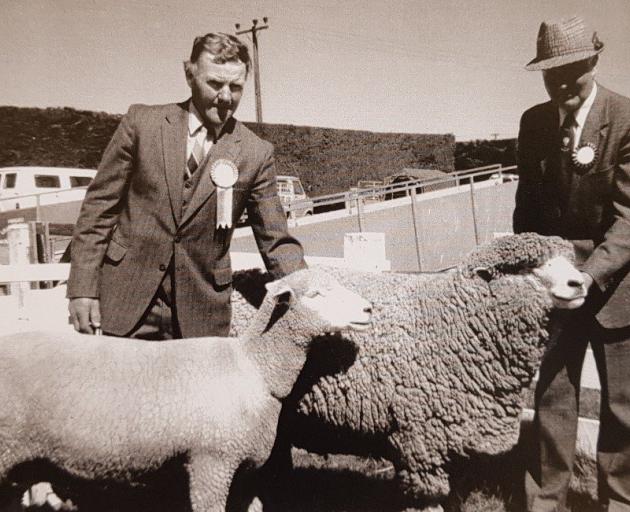
Neville Moorhead, left, with the champion Corriedale ewe and father Mac Moorhead with the champion Corriedale ram at the 1987 Ellesmere A&P Show.

Neville Moorhead, left, with the champion Corriedale ewe and father Mac Moorhead with the champion Corriedale ram at the 1987 Ellesmere A&P Show. PHOTO: ELLESMERE A&P ASSOCIATION ARCHIVES

Four daughters exhibited pet lambs in their younger years before moving on from farming.

Today he still organises the stock judging for Young Farmers club members and his association with this organisation goes back to 1957.

The mixed-cropping farmer spent a lifetime growing processed peas, wheat, barley and white clover for seed on rich Paparoa silt loam soils in the district.

Southdowns and Corriedales played a large role in the mix. For many years they put Southdown rams to the Corriedale ewes for prime lambs.

The Southdown stud was established in 1935 by his father, and the Corriedales in 1957. The first Southdowns came from the nearby Oakleigh farm owned by Canterbury Seed Company when the flock was dispersed in 1945 and others from the Andrew family.

Mr Moorhead can remember helping drive the new Corriedale arrivals home from the now defunct Southbridge railway station. The Hawarden ewes had been transported by rail and got a chance to stretch their legs in the short journey to the family farm. The railway’s long gone, but the sheep are still there.

He broke away from his father at a young age to farm on his own in 1963, as a 22-year-old. Just over 160ha were leased for five years.

“I was pretty fortunate to have that opportunity to farm that. It was just down the road from the family farm and I tried to keep the stud work going down there, but it was a bit distant really.

“It was solely commercial and I had mixed cropping there again and I had 1000 ewes and a couple hundred hoggets. They were very good sheep too — Romney Merinos — and another indication of changing times was that prime lambs for the works one year made three pounds.”

That was good money and, once inflation is accounted for, more than he’s getting now.

After the four years elapsed, he bought a small block next to his father’s farm and has remained there since.

Part of the land across the road was his grandfather’s.

As he’s aged and the sheep “have got faster”, he’s leased some of the 114ha property to a neighbour across the road and more land to a farmer growing organic beans and potatoes.

Apart from the help of Frances Donald during lambing over the past nine years, he still runs the farm himself.

That’s left him with his stud sheep on a smaller working base with the cropping left to others.

“I’d rather be with the sheep to be quite honest. It’s just the love of animals I guess and breeding. It’s probably because I’ve had a big background since I was that big,” he said, reaching to the floor.

“My Galpin grandfather farmed Lymington, next door to Jo’s farm, on the Rakaia side of Holly Farm. They had several breeds of stud sheep and pigs. I was up at his place every weekend so I had a bit of background up there and then on the other side of the Hurford family they had Jersey cattle and pigs again so I had no choice, but I still had to enjoy it to carry on. I still enjoy trying to breed a slightly better one than last year.”

The Jo he’s referring to is Jo Jermyn Benny, author of the updated Ellesmere A&P Show history called Beyond the Show Gates.

Mr Moorhead’s story is one of many in the publication — just a bit longer than most — and the pair share the same bond for the show and have farming ties.
Southdown and Corriedale sheep breeder Neville Moorhead at Holly Farm in Canterbury’s Southbridge with Jo Jermyn Benny, author of an updated history of the Ellesmere A&P Show called Beyond the Show Gates.

Southdown and Corriedale sheep breeder Neville Moorhead at Holly Farm in Canterbury’s Southbridge with Jo Jermyn Benny, author of an updated history of the Ellesmere A&P Show called Beyond the Show Gates. PHOTO: TIM CRONSHAW

The book updates two earlier editions of the show’s history to bring it up to speed.

Ms Jermyn Benny grew up in Marlborough on a sheep and cattle farm on the south side of Awatere Valley. Her husband, Andrew Benny, also has Marlborough connections, his mother growing up in the historic Langley Dale homestead, in Northbank, Wairau Valley, but he was raised in Canterbury.

They farm a mixed cropping and fine wool flock just up the road from Holly Farm, with the Benny family having farmed in the Southbridge district since the 1860s. In fact, the Benny family built the homestead on Holly Farm where Mr Moorhead lives now.

Ms Jermyn Benny visited the Ellesmere show while she was at Lincoln University, before marrying and moving to the district.

Their show link is also strong with Mr Benny on the A&P show committee since 2004 and was president over the challenging Covid-19 lockdown era.

Because of that he’s one of just three presidents to hold more than a one-year term. He was due to lead the show for its 150th anniversary in 2020 until it was postponed for the following year with attendance restricted to exhibitors to the disappointment of the community.

It was the first time the show was cancelled since 1942 during World War Two.

Ms Jermyn Benny has enjoyed researching the show’s history while updating events of the past 25 years. With the assistance of local historian Mike Noonan more stories and photographs were added to the accounts of earlier editions.

Records were lost to a 1906 fire which made it difficult to find early details, but there was no shortage of information more recently from monthly meetings and annual reports, she said.

Somewhat surprisingly, two conversation points have consistently raised their head.

“I’ve seen the early minutes and if you look right through from the 1900s to now the two key topics that keep coming up are traffic and toilets. Literally toilets are mentioned at almost at every meeting and the progression of facilities.

“Neville and I had a great day driving around at the showgrounds when we first started the project. He’s got a phenomenal memory for where buildings had been moved on sleds and the ring reconfigured and a lot of history that few people would have any idea about.”

Thousands of people turn up for the show, claimed to be the largest one-day A&P show in the South Island with the Mackenzie show also somewhere in this mix.

Mr Moorhead said the show had survived and grown because of a strong farming community and the rise of trade sites selling products over the years.

“There isn’t as many sheep in the district as there once was and the dairy has really taken off, but not at the expense of the stud breeding at the show. Some years ago there were many Jersey, Friesian and shorthorn studs in the district and they did exhibit at the show, whereas today there are very few of them.

“So, things have changed immensely and when you take where I am through to the Rakaia bridge thousands of sheep have gone out of that area to cattle and that’s one of the big changes I’ve seen.

“The cattle have dropped away at the show and pigs have dropped away. There are still a few sheep studs of various breeds in Ellesmere, but at their peak, goodness gracious, there would be one at nearly every road. That’s going back sometime, but shows you how numbers have dropped away.”

For all that, sheep entries have held up during show day, he said.

Ellesmere also receives about 1000 horse entries to keep the stock side strong.

Canterbury Southdown and Corriedale breeder Neville Moorhead was a six-year-old sitting on the ring pipe at the top of the showgrounds during the Ellesmere A&P Show’s grand parade in 1947.

Canterbury Southdown and Corriedale breeder Neville Moorhead was a six-year-old sitting on the ring pipe at the top of the showgrounds during the Ellesmere A&P Show’s grand parade in 1947. PHOTO: ELLESMERE A&P ASSOCIATION ARCHIVE

Mr Moorhead said long-established names of farming families remaining in the district had also created show loyalty.


Thumbing through a long list of presidents dating back to Reverend William Bluett in 1870, many of the same surnames crop up, as the next generation lines up for service.

The community-minded Moorheads have a long association with the local Anglican church with Mr Moorhead ringing the Sunday bell since he was 13-year-old.

Another tie that goes way back is his connection with the New Zealand Young Farmers Club and he was made a life member in 2014.

“With those three groups I sort of believe in joining and belonging to something and trying to attend it and do it well rather than belong to five or six organisations and send apologies to half of them. That’s just my attitude.”

He had 35 to 40 Lincoln University students at his farm recently, going through the fundamentals of sheep breeding and showing them the value of carcass conformation and other traits.

Some of them might go on to show sheep, while others would bank this knowledge when they bought their own stock, he said.

Over the course of decades of exhibiting sheep at Ellesmere he couldn’t count how many ribbons — many of them red — he’s won. Some of them are on the sideboard in the hallway and others stored in a bag.

Among many notable wins, a stand-out was a Southdown ram which went on from the Ellesmere show to become the champion sheep three years in a row at the Canterbury A&P Show in Christchurch about a decade ago. The ram won as a hogget, two tooth and four tooth and was a mainstay sire at the Holly Farm stud and there’s still 50 straws from him banked away.

Before that, another two champion ewes won their classes when the Southdown competitions were particularly strong at the Christchurch event.

Mr Moorhead had another good result in the sheep pens, winning several red ribbons at the Ellesmere A&P Show on October 14 in strong winds unseen since he was president of the 1988 event.

A silver cigarette case presented to him at a centenary show and a sugar bowl are prized possessions.

Ms Jermyn Benny said Mr Moorhead’s show longevity would take some beating.

“There’s not that many around that have that connection and kept it up. Neville is an active A&P person and I can’t think of anybody that would embody that A&P movement more than him. The fact that Neville was racing around the other day trying to find stock judges for the Young Farmers competition at the Ellesmere show just shows his commitment.”

Close to the front of the book is a photograph of the grand parade with men dressed in suits and women in hats and their finest dresses. Behind them are 1920s, 1930s and 1940s cars in neat rows.

As the horses and calves marched past the crowd a young Mr Moorhead, only 6 at the time, was sitting on the ring pipe at the top of the showgrounds watching the parade in about 1947.

The memory of those animals going past remains with him like yesterday.

He can’t imagine ever stopping showing.

“I will keep going for as long as I can. I don’t know how long it will be, but I’m still keen.”

Central Southdown Breeders Club Day

Posted by The Roving Shepherd On November - 17 - 2021

Central Southdown Breeders Club day


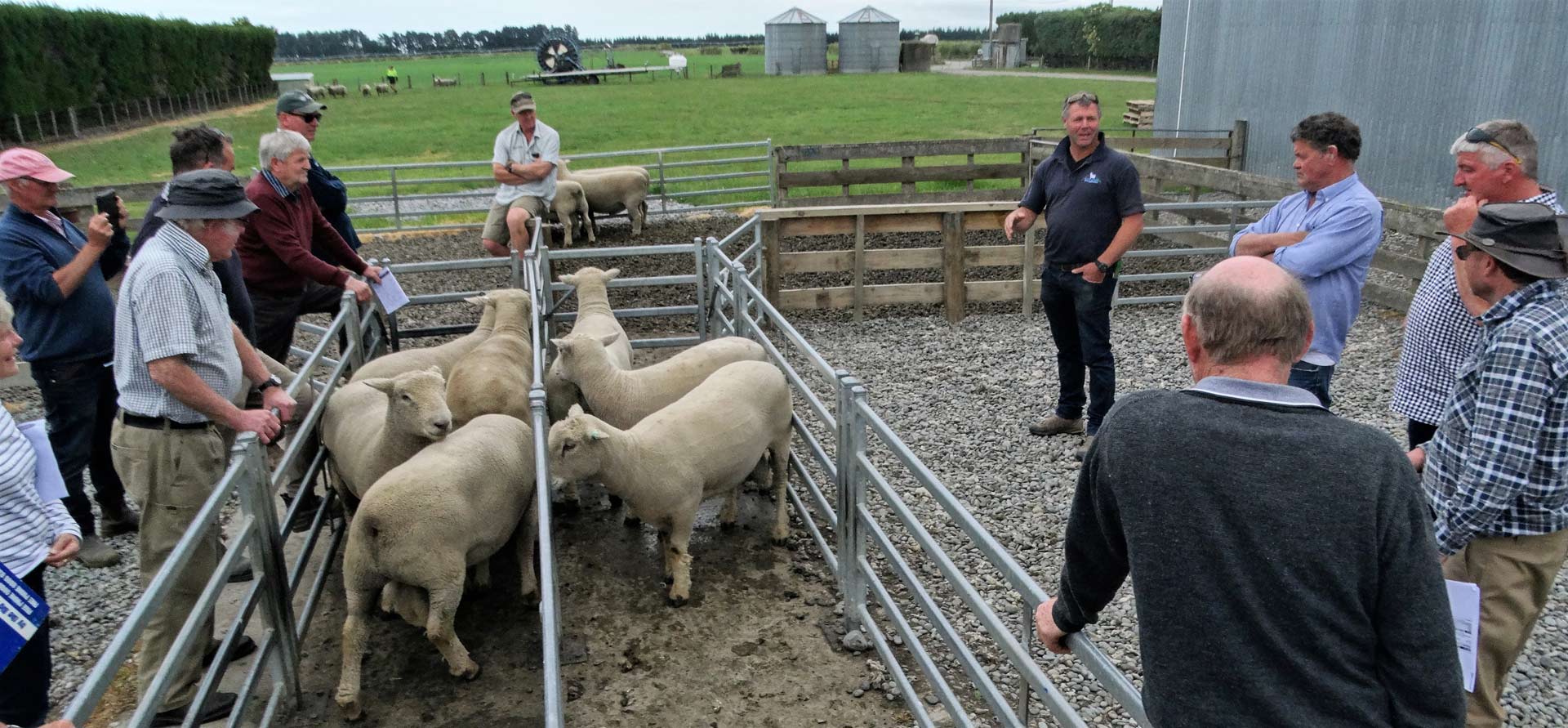
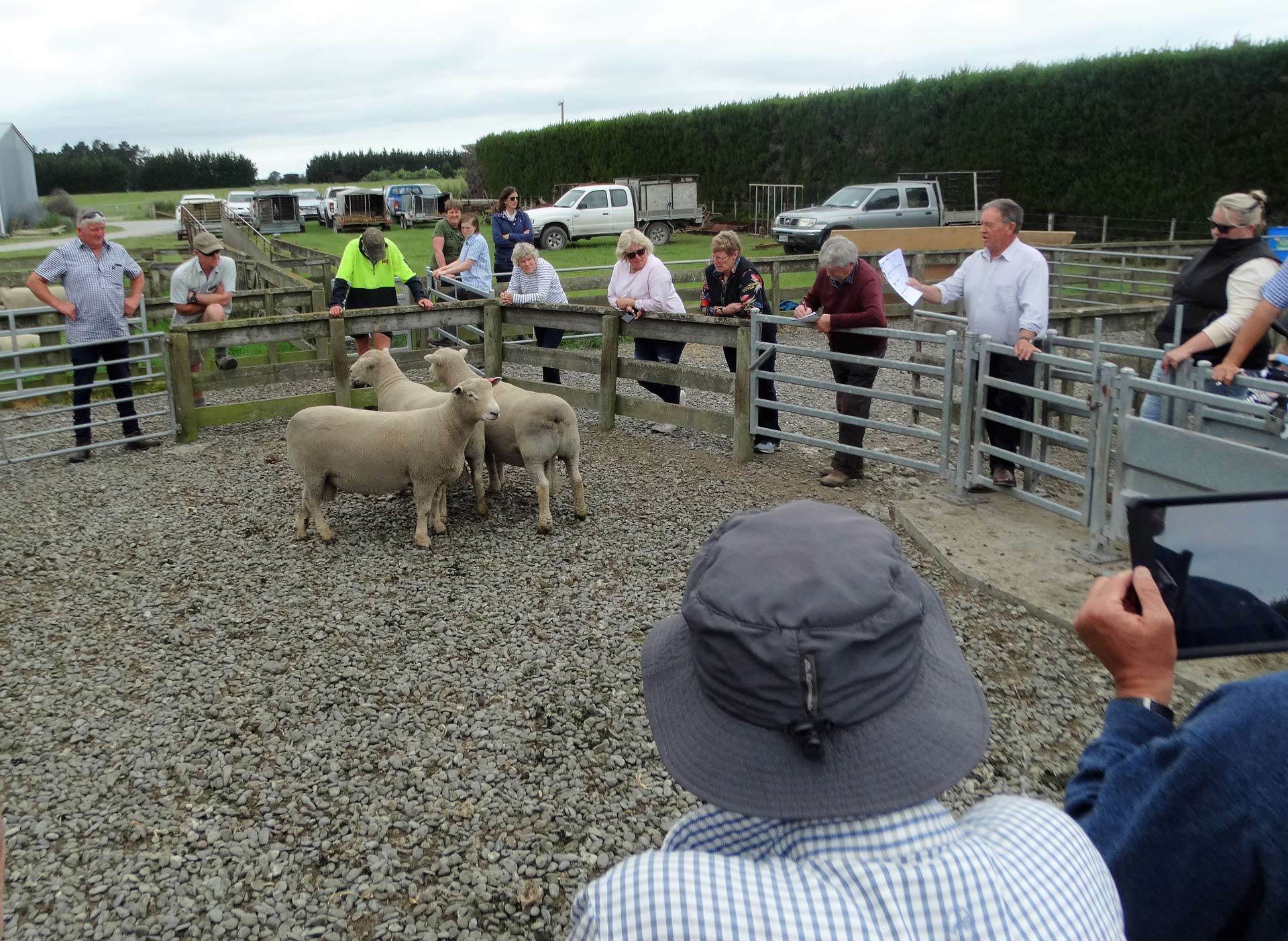
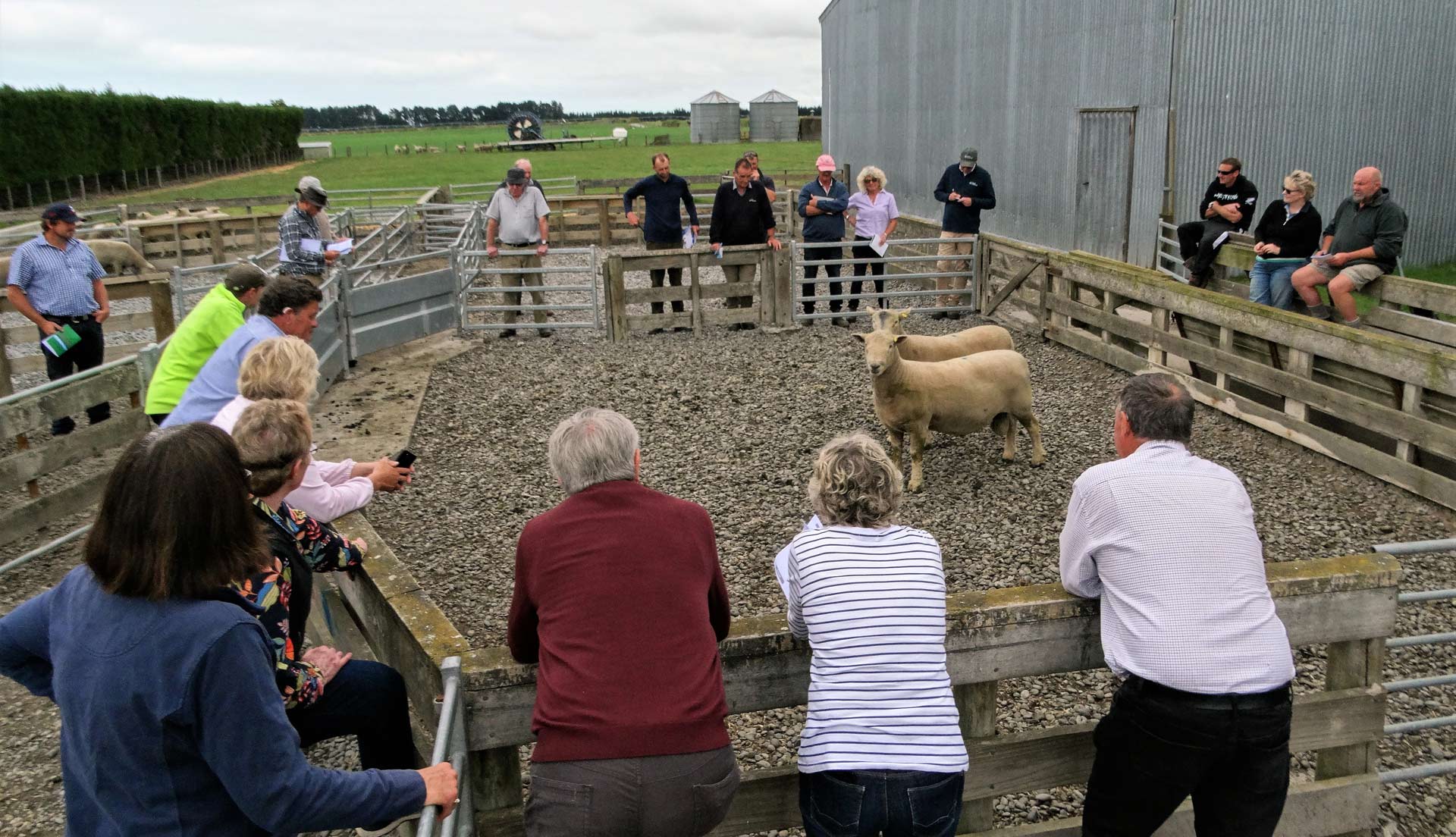
Recently a successful Central Southdown Breeders Club day was held at the home of the Mapua Stud, Andrew and Louise Christey at Southbridge.

The aim was for breeders to bring their ram hoggets, that are entered in the Canterbury Ram Fair, or their own on farm sales that have the potential to be stud sires to be seen by everyone.

There were 38 rams on display, from Blenheim in the North, to Oamaru in the South, and about 40 people, including our New Zealand President, ( judging at the Canterbury A & P Sheep Event the following day) with a number of Stud stock agents also attending.

A fantastic lunch was provided by the Club.

Thanks go to Andrew and Louise for a great day.


Central Southdown Breeders Club day


Central Southdown Breeders Club day


Southdown ram takes top prize at Little River

Posted by The Roving Shepherd On February - 20 - 2021

North Canterbury sheep genetics came out on top at Little River last month.

John and Stacey Burrows of Burrows Genetics, from Oxford with their supreme champion sheep

John and Stacey Burrows of Burrows Genetics, from Oxford with their supreme champion sheep

John and Stacey Burrows of Burrows Genetics, from Oxford, won supreme champion sheep at the Banks Peninsula A&P Show on Saturday, January 23, with a six-tooth Southdown ram.

“We won it in 2017 at Little River with a Dorset Down ram. We like coming over here. It’s a good little show and very well run,” Mr Burrows said.

The champion ram was bought from Lincoln farmer Brent Macaulay, and the ram’s daughter, a two-tooth Southdown ewe, claimed all breeds champion ewe.

One of Mr Burrow’s Dorset Downs also won all breeds champion ram lamb, to cap off a good start to the New Year.

“It makes the early start worth it,” Mrs Burrows said.

The Burrows family entered 21 sheep to help boost sheep entry numbers to 190.

“The entries closed before Christmas and they were slow coming in, so [show junior vice-president] Ben Butterick put out a message saying ‘we’ve got no entries’, so we made sure we had a good team,” Mr Burrows said.

The Burrows have 100 Southdown, 100 Dorset Down and 30 Suffolk stud ewes.

“I’ve had a good run with the Dorset Downs and when I got together with Stacey, she decided we needed some Southdowns as well, so they’re her thing really .

“I’m a stickler for the Dorset Downs really, but they’ve all got their attributes. The Southdowns, we sell a lot of them for hogget mating and they’re going really well.

“We’ve got a sheep conveyor business and a lot of places we go to use Suffolks,” he said.

The Suffolk stud has been established for the couple’s 13-month-old daughter Holly.

Stud sheep are in Mr Burrow’s blood, as his father Tom Burrows, the New Zealand Sheepbreeders’ Association president, has been breeding sheep since the 1970s, and his great-uncle Tug Burrows was a well-known Corriedale breeder.

Mr Burrows was pleased to be back to showing sheep and catching up with farmers, after some shows were cancelled last year due to Covid-19.

“We’ve got a year to catch up on now and have a look at everyone else’s sheep. We were at home looking at our sheep the whole time.”

Sheep convener Dave Butterick was pleased with the response, after an uncertain year.

While entries were down compared to last January, there was no feature breed this time, which tended to boost entries.

“Last year was one to forget, so it’s just good to get back to having some shows.”

Southdown sheep entries were strong, while the black and coloured sheep classes were well-supported and there were good numbers of Poll Dorsets and Suffolks, he said.

Charlee and Ellavetta steal the show

Posted by The Roving Shepherd On February - 10 - 2021

Charlee Hazlett and Ellavetta are not your usual pair of best friends.

One is a 5-year-old girl, and the other is a Southdown sheep.

But nothing will stand in the way of the bond these two share.

The pair were glued at the hip as they wandered through the Palmerston Waihemo A&P Show — where Ellavetta won first prize in the large pet section — on Saturday.

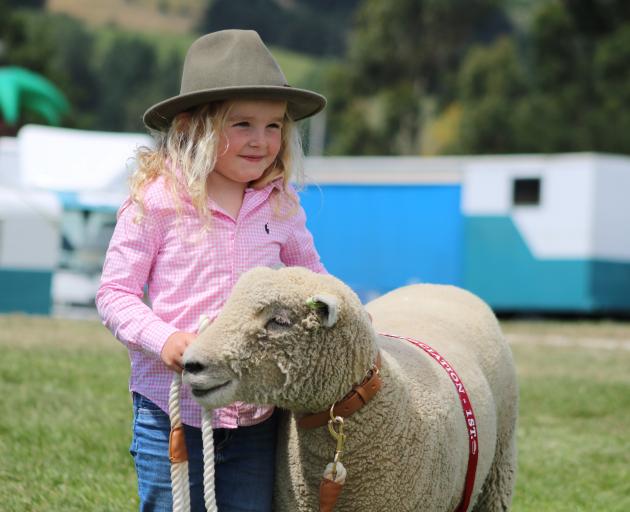
Charlee Hazlett, of Hokonui, won best large pet with her Southdown sheep Ellavetta at the Palmerston Waihemo A&P Show on Saturday

Charlee Hazlett, of Hokonui, won best large pet with her Southdown sheep Ellavetta at the Palmerston Waihemo A&P Show on Saturday. PHOTOS: KAYLA HODGE

Charlee was over the moon with her prized sheep’s victory, and said her favourite thing about her pet was the way “she follows me around”.
Her trick to getting Ellavetta into shape was simple.

“I just give her some nuts,” Charlee said.

They travelled from Hokonui to take part in the show, and would venture around other Otago and Southland A&P shows in the coming months.

A record was set at the Canterbury A&P Association elite ram and ewe fair on Friday.

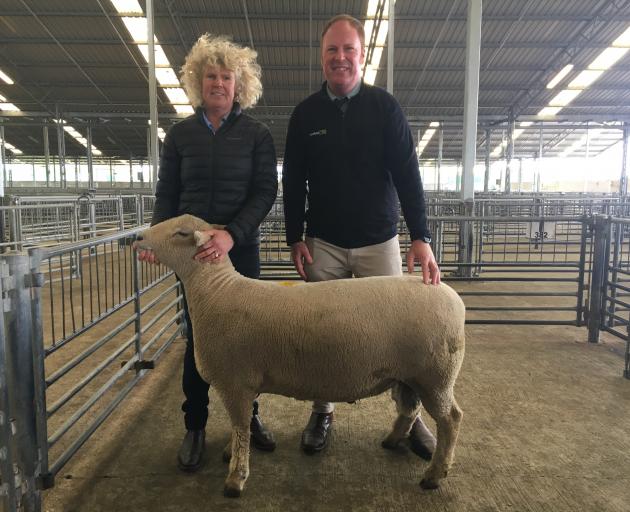
Blenheim farmer Christina Jordan (left) was thrilled to sell her Southdown ram hogget for $17,000, which set a new record for the highest price at the Canterbury A&P Association elite ram fair on Friday.

Blenheim farmer Christina Jordan (left) was thrilled to sell her Southdown ram hogget for $17,000, which set a new record for the highest price at the Canterbury A&P Association elite ram fair on Friday.

Blenheim farmer Christina Jordan topped the sale, picking up a Canterbury A&P Association record price of $17,000 for her Southdown ram hogget, which was sold to Lachie Elliot, of Lammermoor Station in Central Otago.

The record beat three sales $16,000 paid in recent years, twice by Oxford farmer Dave Gilliespie, and one in partnership with North Canterbury farmer Phil Williams to buy a ram hogget off Ms Jordan seven years ago.

A regular at the Canterbury A&P Association ram fair, Ms Jordan had brought and sold several top priced rams in recent years.

“Buying quality usually pays off in the long run, especially with rams.

“If they’ve got good figures, there’s certainly demand for that overall package.

“We just try to get the right sire to our selected ewes to hopefully maximise their strengths and minimise their weaknesses.”

Top stud breeders were looking for conformation, soundness and overall balance, she said.

Ms Jordan said she bought the ram hogget’s sire in partnership with Masterton farmer Lucy Thornycroft and “he was a lot cheaper, he’s been a very good investment”.

Carrfields stud stock agent Callum Dunnett said Ms Jordan’s top priced ram hogget was “a magnificent animal, as good a ram as you’ll ever see”.

“This ram is quite unique. To see a 1.1-foot score, which is the best, is extremely rare and he’s got terrific figures to go with him and he’s the perfect package as an animal.”

Overall, Ms Jordan had a mixed result, as her other two Southdown ram hoggets were passed in.

Stock agents reported a mixed result overall.

“It’s been patchy,” PGG Wrightson livestock genetics auctioneer John McKone said.

While the Suffolk sheep had a good sale, the other breeds struggled, he said.

“The Suffolks probably had the best of the market and were able to tap into more of the buying power.

“The morning was difficult and it was probably underpinned by the commercial clients.”

The low wool price was having an impact, as well as lower ewe numbers and several stud breeders were now hosting their own on-farm ram sales, Mr McKone said.

The day’s second-highest price was $10,000 paid for a Suffolk ram hogget vendored by Eric Ross of Collie Hills Partnership, at Hakataramea in South Canterbury.

The ram was sold to a syndicate comprising North Canterbury farmers Jimmy Gardiner and Charles Miller-Brown, along with Symon Howard, of Lawrence.

Courtesy ODT Farming News – Article and photos by David Hill

Sheep and breeders flock to Amberley

Posted by The Roving Shepherd On November - 4 - 2020

There were large numbers of sheep at the Amberley Domain on Saturday.

More than 240 sheep were entered, including lambs and flock sheep, and Amberley A&P Show sheep section convener Jimmy Gardiner said it was the biggest sheep show in Amberley for at least 10 years.

“We haven’t had these numbers for a good number of years. We’ve got more 50 Corriedales, 40 Dorset Downs and good numbers in all the breeds, which is a credit to all the breeders for coming to support our little show.”

Sheep were transported from as far south as Oamaru and as far north as Blenheim.
The Gardiner family has been supporting the local Amberley show for generations, with Mr Gardiner farming at Broomfield, near Amberley, running 1800 commercial ewes and 300 Suffolk and South Suffolk stud ewes and 80 beef cows.

Waipara farmers Keith and Ruth Berry won all breeds champion ewe hogget with a young Texel ewe.

“She’s a really well-balanced sheep, good colouring, good on her feet and legs and she’s a good all-round, clean ewe hogget,” Mr Berry said.

The couple has been breeding Texels since the 1990s and were regular supporters of the Amberley show, with Mrs Berry stewarding for the pet lamb classes.

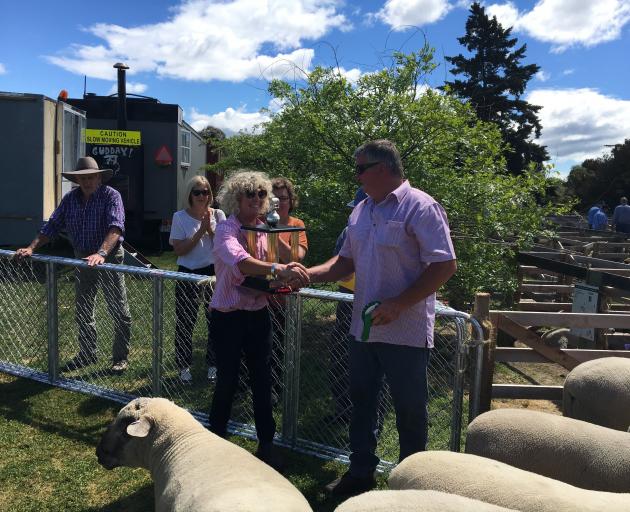
Phil Williams, of Amberley, congratulates Christina Jordan, of Blenheim, on winning the all breeds commercial ram hogget competition, presenting a trophy donated by Mr Williams’ parents.

Phil Williams, of Amberley, congratulates Christina Jordan, of Blenheim, on winning the all breeds commercial ram hogget competition, presenting a trophy donated by Mr Williams’ parents.

Blenheim farmer Christina Jordan is a regular winner at the New Zealand Agricultural Show with her Southdown sheep, but she has never won a trophy as big as the one she won for the all breeds commercial ram hogget competition on her first time showing at Amberley.

The trophy was presented by Amberley farmer and fellow Southdown breeder Phil Williams, whose parents, Bryan and Trish Williams, of Blenheim, donated the trophy.

The Willowhaugh Southdown Stud won the all breeds elite ram hogget competition.

Normally Ms Jordan would be preparing for her local Marlborough A&P Show this weekend and the Christchurch show the following week, but both have been cancelled.

“Without the Christchurch show we will move on to ram sales. Normally our life evolves around the Christchurch show for a week, so it will be a bit different this year,” Ms Jordan said.

“But it’s good to fly the Southdown flag.”

The Willowhaugh Southdown sheep will be back in Canterbury later this month, with three ram hoggets entered in the Canterbury A&P Association elite ram fair on November 27.

Corriedale sheep was the feature breed at the show with a special ribbon for the champion Corriedale ram hogget entered in the show going to West Melton farmer Robin Wilson.

Meanwhile, the top sheep from New Zealand Corriedale Council’s annual production ram and ewe hogget competitions, normally displayed at the New Zealand Agricultural Show, were on display at Amberley.

North Canterbury farmer Mark “Chief” Sidey, who is council president, won the production ram hogget class, while Southbridge farmer Gordon Gilbert came out on top in the ewe hogget class.